
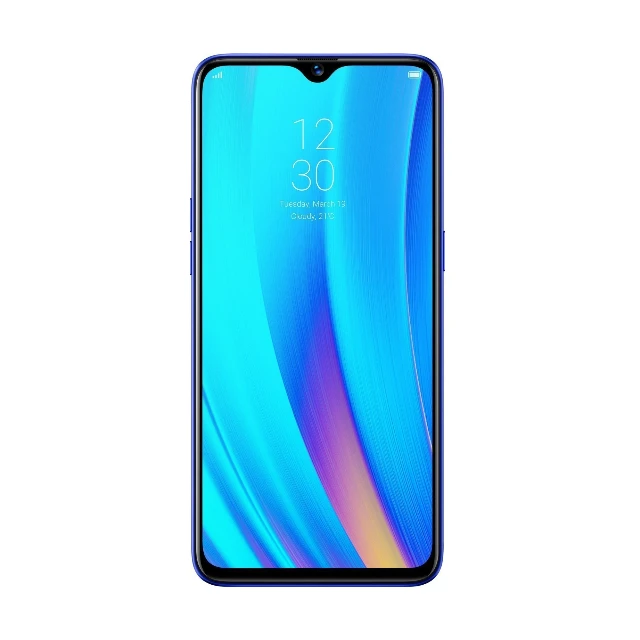
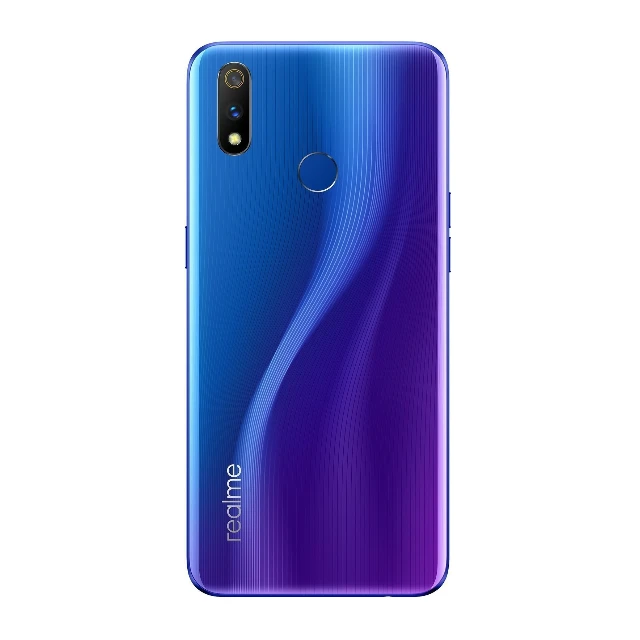
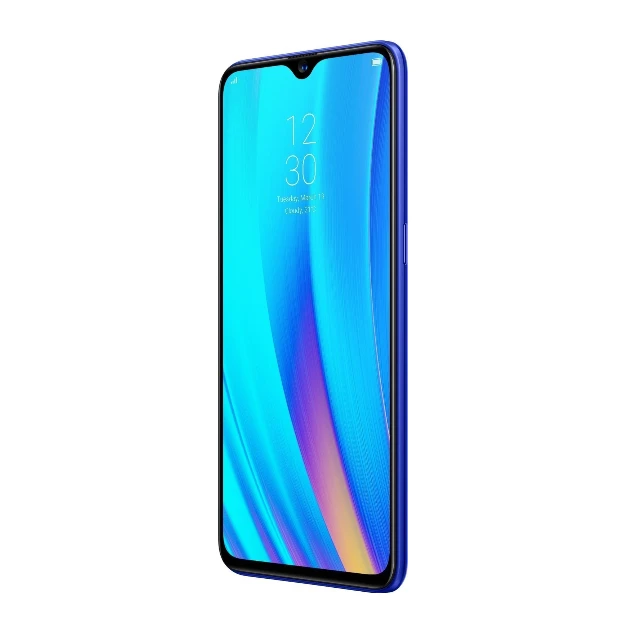
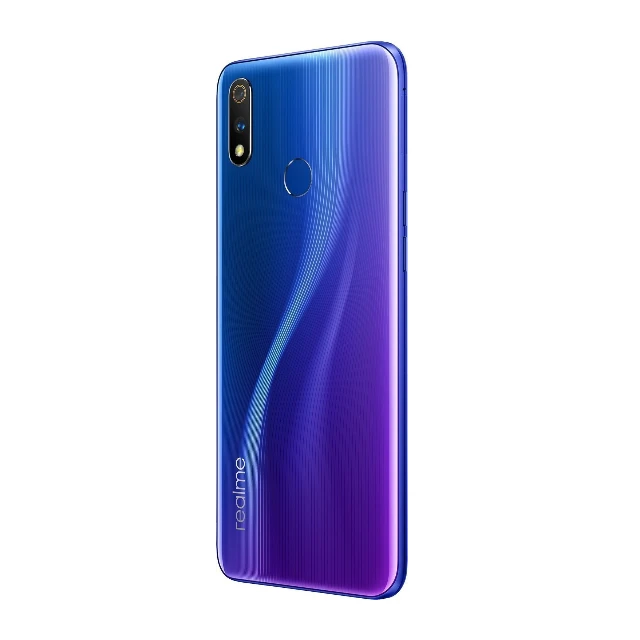
The Realme 3 Pro is a mid-range smartphone launched in India in April 2019, designed to deliver strong processing performance, versatile cameras and fast charging at an affordable price. It features a 3D Speedway-inspired gradient design with an S-shaped light pattern on the rear panel. The phone is available in colours such as Nitro Blue, Lightning Purple and Carbon Grey, with Corning Gorilla Glass 5 protection on the front.
The device sports a 6.3-inch Full HD+ IPS LCD display with a resolution of 2340 × 1080 pixels and a waterdrop-style notch. Its 19.5:9 aspect ratio provides a spacious viewing experience for watching videos, browsing and playing games. The display also offers good colour reproduction and sufficient clarity for everyday entertainment.
At its core, the Realme 3 Pro is powered by the Qualcomm Snapdragon 710 octa-core processor, paired with the Adreno 616 GPU. Built on a 10nm manufacturing process, the chipset delivers capable performance for multitasking, everyday applications and casual to moderately demanding gaming. It comes with 4GB or 6GB RAM and 64GB or 128GB internal storage, with expandable storage support up to 256GB.
For photography, the smartphone features a dual rear camera setup consisting of a 16MP Sony IMX519 primary sensor with an f/1.7 aperture and a 5MP depth sensor. Camera features include Nightscape, Chroma Boost, AI scene recognition and Ultra HD mode. The 25MP front camera with an f/2.0 aperture supports AI-assisted selfies and portrait photography. Video recording capabilities include 4K recording and electronic image stabilisation.
The Realme 3 Pro packs a 4,045mAh battery with 20W VOOC Flash Charge 3.0 support, offering faster charging than standard 10W solutions. It originally runs ColorOS 6 based on Android 9 Pie, with features such as Hyper Boost 2.0 for gaming optimisation.
Connectivity options include dual SIM 4G VoLTE, dual-band Wi-Fi, Bluetooth 5.0, GPS, a Micro-USB port and a 3.5mm headphone jack. Overall, the Realme 3 Pro combines capable hardware, a Full HD+ display and fast charging in a well-rounded smartphone package for its launch period.
The Realme 3 Pro was a strong contender in India’s mid-range smartphone segment when it launched, particularly for users who prioritised processing power and gaming performance. Its Snapdragon 710 chipset and Adreno 616 GPU offered a noticeable performance advantage over many entry-level and budget smartphones of its generation.
One of its biggest strengths is the combination of a capable processor and a Full HD+ display. The screen provides a sharper viewing experience than HD+ alternatives, while Gorilla Glass 5 adds an extra layer of protection. The 20W VOOC 3.0 charging technology is another advantage, making battery top-ups considerably more convenient than conventional charging solutions available at the time.
Photography is reasonably versatile for a phone of its generation. The Sony IMX519 primary sensor captures detailed images in favourable lighting, while Nightscape and Chroma Boost provide additional shooting options. The 25MP front camera is also suitable for selfies and video calls. However, low-light photography can produce inconsistent results, and the secondary rear camera primarily supports depth detection rather than offering a dedicated wide-angle or telephoto experience.
Despite its strengths, the Realme 3 Pro has some ageing hardware limitations. Its Micro-USB port, lack of 5G connectivity and older software platform make it less competitive against current smartphones. The 4,045mAh battery remains reasonable in capacity, but battery health on used units can vary significantly due to age.
The Realme 3 Pro is suitable for collectors, users interested in older Realme devices and buyers considering an inexpensive refurbished smartphone for basic tasks. It is not an ideal choice for demanding gaming, modern applications or long-term primary smartphone usage in 2026.
Our verdict: The Realme 3 Pro offered an impressive balance of performance, display quality and charging speed at launch. However, its outdated connectivity and software make it difficult to recommend as a primary smartphone today.