
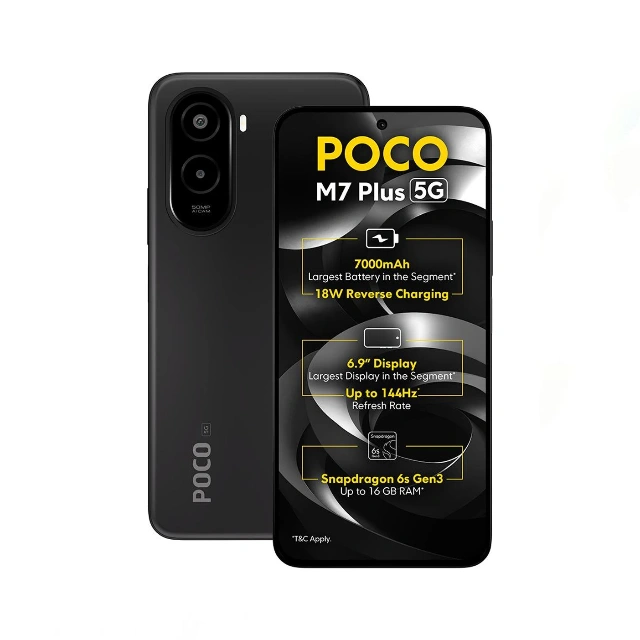
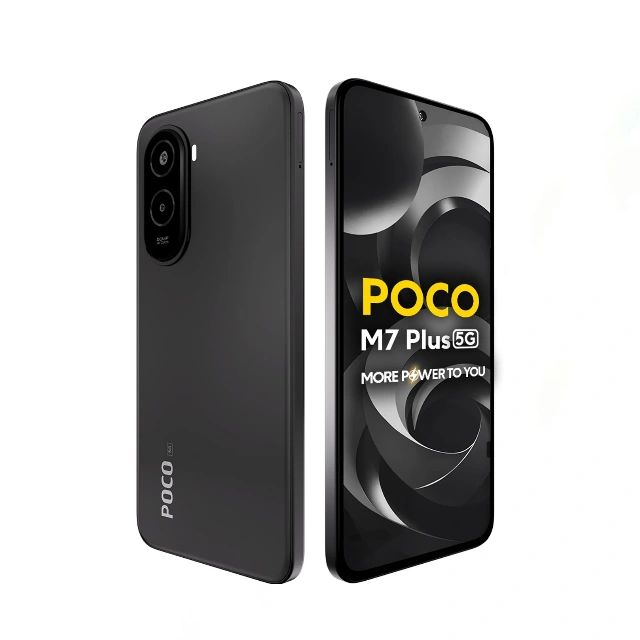
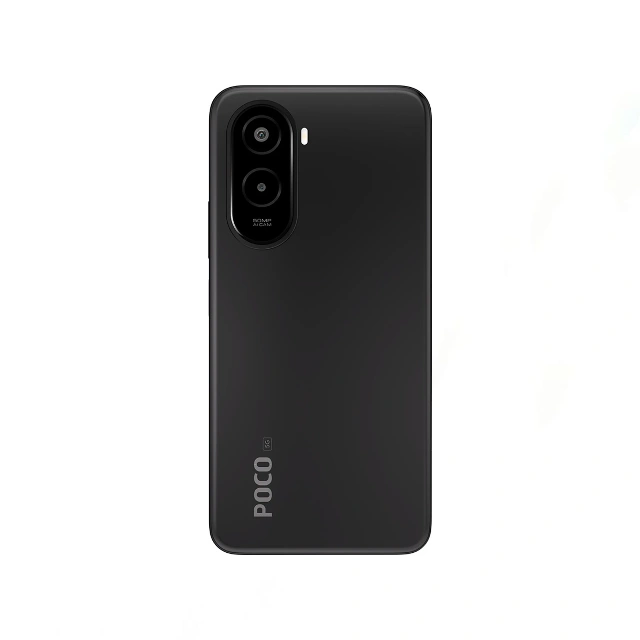
The Poco M7 Plus 5G is a budget-focused smartphone built for users who prioritise battery life, a large screen and dependable everyday performance. Its 6.9-inch Full HD+ LCD display offers a resolution of 2340 × 1080 pixels and a refresh rate of up to 144Hz. This combination provides a spacious viewing area for videos, reading, social media and compatible games, while the higher refresh rate helps make scrolling and animations appear smoother.
Inside, the phone uses the Qualcomm Snapdragon 6s Gen 3 processor, paired with up to 8GB of RAM and 128GB of internal storage, depending on the variant. It is suitable for routine tasks such as messaging, browsing, online classes, video streaming and switching between common apps. The available storage can be expanded through a compatible memory card, although the hybrid SIM arrangement may require users to choose between a second SIM and a memory card.
For photography, the Poco M7 Plus 5G features a 50MP main rear camera accompanied by an auxiliary sensor. It is designed for everyday photographs, including outdoor scenes and casual portraits, but it does not offer a dedicated telephoto camera or optical image stabilisation. An 8MP front camera handles selfies and video calls. Both cameras are better suited to regular use than to users seeking advanced photography or professional-grade video features.
A 7,000mAh battery is one of the phone’s main attractions. It is designed to support extended use between charges, particularly for people who spend considerable time watching videos, browsing or communicating. The device supports 33W wired fast charging and 18W reverse wired charging, which can be useful for powering compatible accessories or another device.
The phone runs Android 15 with Xiaomi’s HyperOS 2 interface. Connectivity features include 5G, 4G LTE, Wi-Fi, Bluetooth 5.1, GPS and USB Type-C. An IP64 rating offers protection against dust and water splashes, but it does not make the phone waterproof. The handset weighs around 217g, so its large battery and screen come with a relatively substantial body.
Overall, the Poco M7 Plus 5G focuses on practical features for users who want a large display, long battery endurance and 5G connectivity without moving into a premium price category.
The Poco M7 Plus 5G makes the most sense for buyers who value endurance and screen size over advanced cameras or a compact design. Its 7,000mAh battery is a major advantage for heavy users, commuters, students and people who regularly watch online content away from a charger. The 144Hz display also gives the phone a smoother feel than many basic smartphones, while Full HD+ resolution keeps text and images reasonably sharp across the large panel.
Performance is adequate for everyday apps and moderate multitasking. The Snapdragon 6s Gen 3 is not intended to compete with flagship processors, so users who play demanding games at high graphics settings should keep their expectations realistic. Choosing a higher-RAM variant may be worthwhile for people who frequently switch between applications.
The camera setup is more functional than ambitious. The 50MP main camera can serve for casual photography, but the absence of optical image stabilisation and a dedicated zoom lens limits its appeal to photography enthusiasts. The 8MP selfie camera is suitable for routine video calls and social posts, though users who prioritise detailed selfies or advanced video tools may want to compare alternatives.
There are also practical trade-offs. At around 217g, the phone may feel heavy during extended one-handed use. The 33W charging speed is reasonable, but refilling a 7,000mAh battery can still take time. The hybrid SIM slot also reduces flexibility if you want to use two SIM cards and expandable storage simultaneously.
For Indian buyers who want a large, smooth display, substantial battery capacity and 5G support for everyday use, the Poco M7 Plus 5G is a sensible option to consider. It is less suitable for those who want a lightweight phone, premium gaming performance or a versatile camera system. Compare its current price with similarly priced alternatives before choosing a variant.