
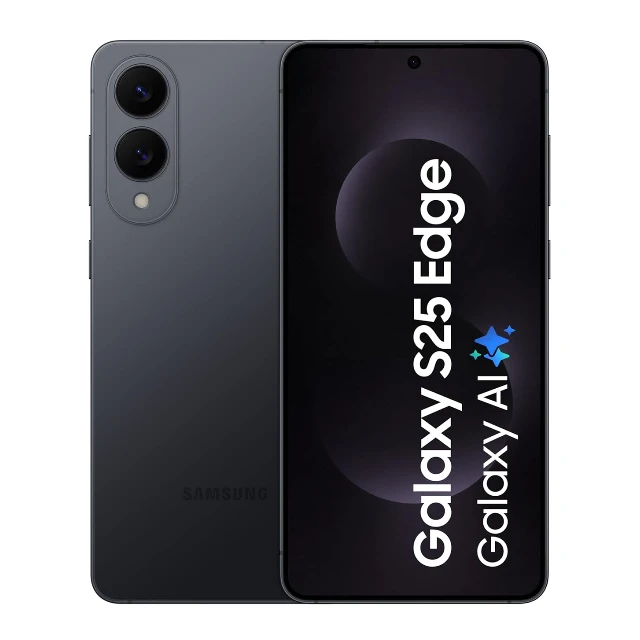
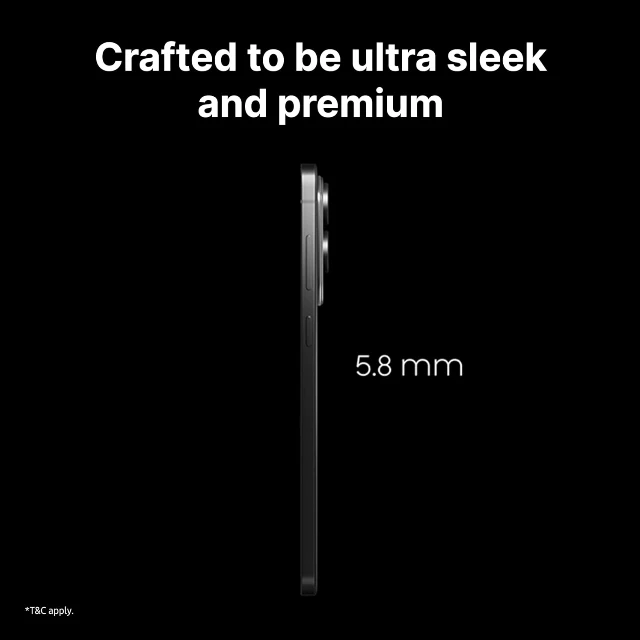
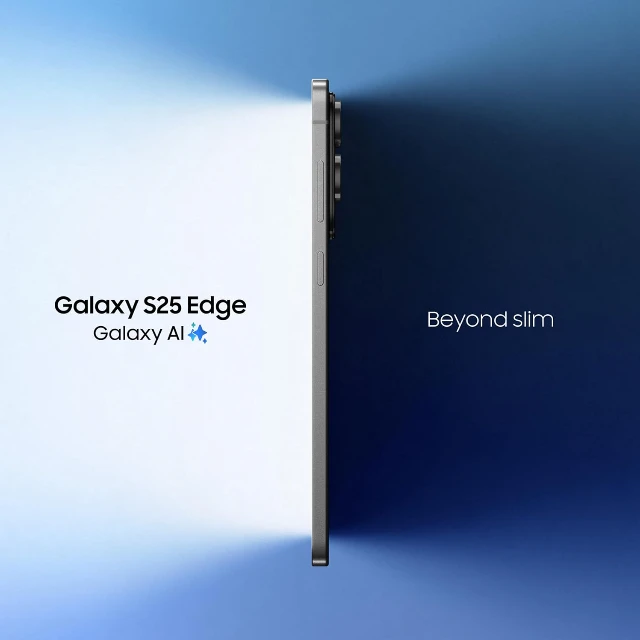
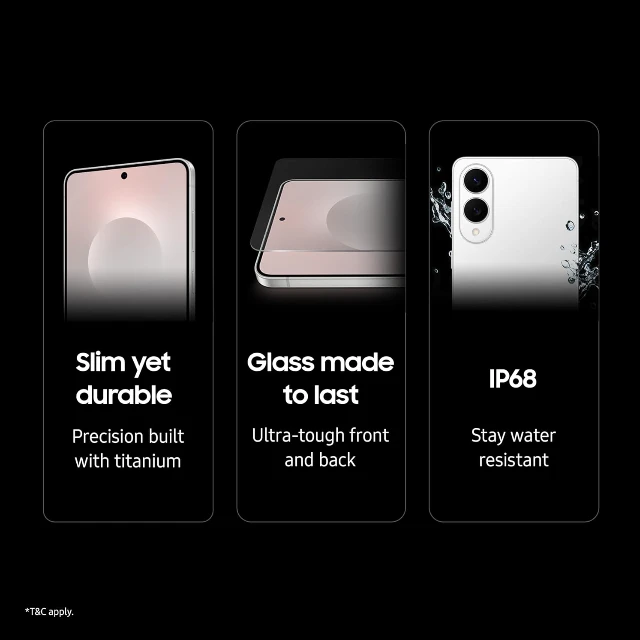

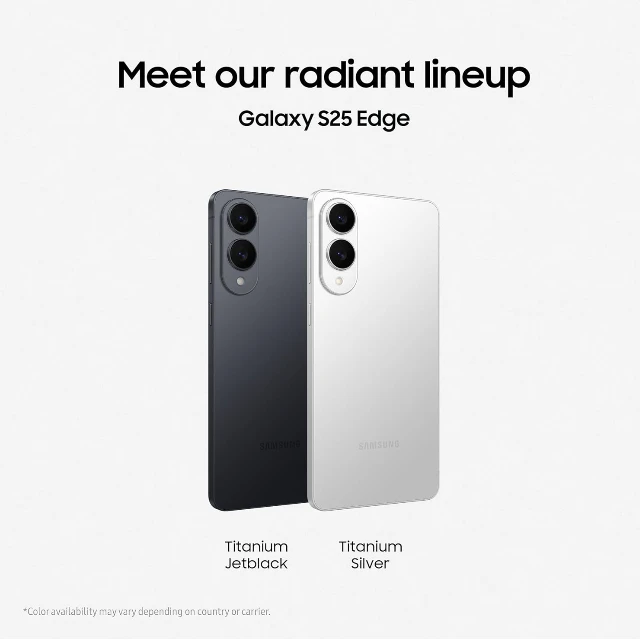
The Samsung Galaxy S25 Edge is a flagship phone built around one idea: putting top-tier hardware into an exceptionally thin body. It is just 5.8 mm thick and weighs 163 g, which makes it far easier to carry than most large-screen premium phones. Despite the slim profile, it is rated IP68 for dust and water, with resistance listed up to 1.5 m for 30 minutes. It is available in Titanium Silver and Titanium Jetblack.
The 6.7-inch Dynamic AMOLED 2X display runs at a 1440 x 3120 resolution with a 120Hz refresh rate, giving a sharp pixel density of around 513 PPI. It supports HDR10+ and an Always-on Display, reaches a listed peak brightness of 2600 nits and is protected by Gorilla Glass Ceramic 2. The selfie camera sits in a small punch-hole cutout.
Inside is the Qualcomm Snapdragon 8 Elite, an octa-core chip clocked at up to 4.47GHz, paired with the Adreno 830 GPU and 12GB of RAM. Storage options are 256GB and 512GB of UFS 4, with no memory card slot. Its AnTuTu v10 score of close to 2 million places it among the fastest Android phones of its generation.
The rear camera system pairs a 200MP f/1.7 main sensor with optical image stabilisation and a 12MP f/2.2 ultra-wide lens. There is no dedicated telephoto camera; instead, the main sensor offers 2x optical-quality cropping and digital zoom of up to 10x. Video recording goes up to 8K at 30fps and 4K at 60fps, while the 12MP front camera records 4K video at 30fps.
A 3900mAh battery supports 25W wired charging, wireless charging and reverse charging, though the box lists no charger. The phone runs Android 15 with One UI 7 and offers 5G with Vo5G, Wi-Fi 7, Bluetooth 5.4, NFC, eSIM and USB-C. Security is handled by an in-display fingerprint sensor and face unlock, and there is no 3.5mm headphone jack. The phone launched in India at ₹1,09,999 for the 12GB + 256GB model and ₹1,21,999 for the 12GB + 512GB model.
The Galaxy S25 Edge is a phone for buyers who want flagship speed and a high-quality screen without the weight and thickness that usually come with them. It succeeds at that goal, but the slim design forces trade-offs that buyers need to understand before paying for it.
Its strongest points are performance and display quality. The Snapdragon 8 Elite, 12GB of RAM and UFS 4 storage handle demanding games, heavy multitasking, 8K video and on-device processing with ease. The QHD+ AMOLED panel is one of the best in its class, with high pixel density, HDR10+ support and strong peak brightness for outdoor use. IP68 protection, Wi-Fi 7, eSIM and wireless charging round out a genuinely premium feature set.
The 200MP main camera with OIS should capture detailed photos in good light and gives cropping flexibility, and the 12MP ultra-wide covers wider scenes. The missing telephoto lens is a real limitation at this price, though. Buyers who regularly shoot portraits at a distance, concerts or wildlife will get better zoom results from phones with a dedicated telephoto camera.
Battery life is the biggest compromise. A 3900mAh cell is small by current Indian market standards, where many mid-range phones carry 6000mAh to 7000mAh batteries. Moderate users should get through a day, but heavy gamers, frequent travellers and people who use navigation or hotspot for long periods may need a top-up. Charging at 25W is also slow for a flagship, and no charger is included in the box. The thin body may also warm up faster under sustained heavy loads than thicker phones with more room for cooling.
Overall, the Samsung Galaxy S25 Edge suits professionals and style-conscious buyers who value a light, slim phone with top-end performance and an excellent display, and who can live with average battery life and no telephoto lens. It is often sold well below its ₹1,09,999 launch price, which makes it far better value, but buyers who prioritise battery life, fast charging or zoom photography should consider a more conventional flagship.