Tech News
A Comprehensive Comparison of iQOO 13 vs OnePlus 13: Which Flagship Wins?

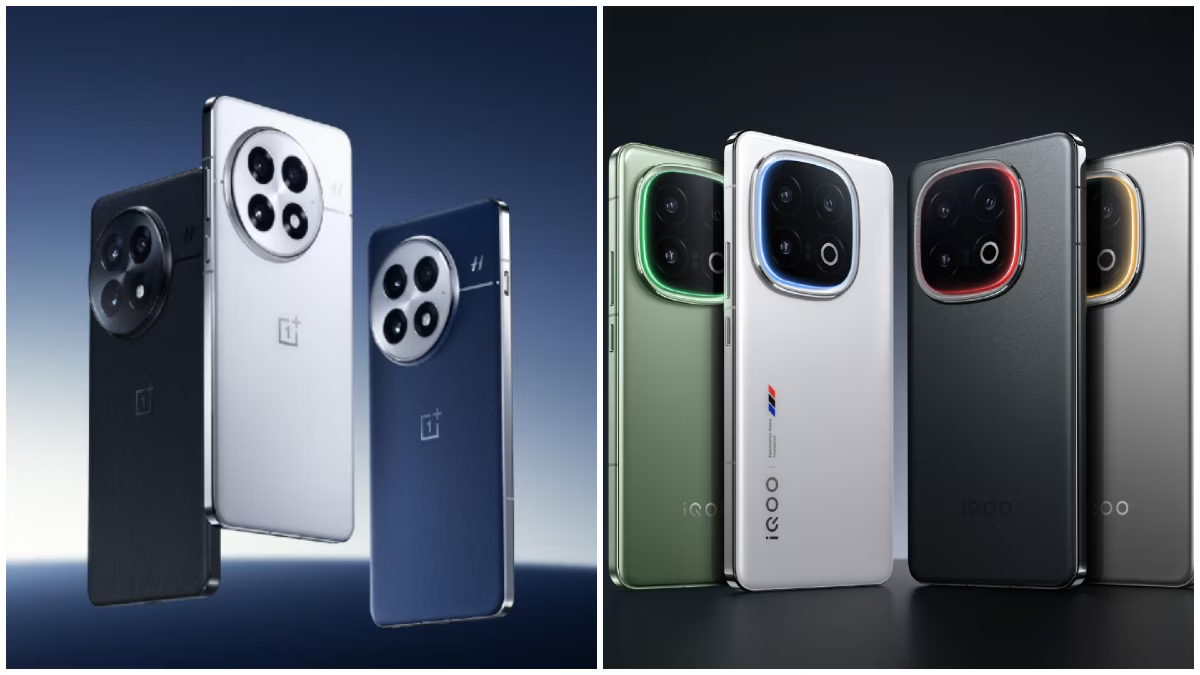
You’re picking between two serious heavyweights the iQOO 13 and the OnePlus 13. At first glance, they share a lot: both are powered by Qualcomm’s Snapdragon 8 Elite chip, both offer high refresh rate displays, and both come with high-end specs that scream “flagship.” But when you start digging under the hood, the differences begin to matter. So let’s break it down not just on paper, but in real-world feel, value, and what you might care about in daily use.
1. Design & Display
iQOO 13
- Packs a 6.82-inch 2K Q10 LTPO AMOLED screen with a whopping 144 Hz refresh rate.
- Peak brightness is reportedly very high (some sources claim 4,500 nits for certain states).
- Under-display ultrasonic fingerprint sensor.
- Has iQOO’s “Monster Halo” notification / design effect around the camera module.
OnePlus 13
- Similarly sized display: 6.82-inch QHD+ (3168 × 1440) with LTPO and 1–120 Hz dynamic refresh.
- Peak brightness is also very high, claims up to 4,500 nits in certain modes.
- The construction is solid; OnePlus quotes Ceramic Guard protection, and the phone weighs 210–213g depending on color / variant.
- IP68 / IP69 rating (dust + water resistance) which is a big plus for durability.
Both phones are visually and technically flagship-class, but iQOO leans a little more into gamer-friendly aesthetics (with its halo lighting), while OnePlus plays it clean and premium. If you like bold, go iQOO; if you prefer refined and rugged, OnePlus is very compelling.
2. Performance & Software
- Both run on Snapdragon 8 Elite, so raw power is comparable.
- iQOO 13 also includes a proprietary Supercomputing Chip Q2 for extra gaming optimization: better frame interpolation, smoother graphics, etc. (Business Standard)
- RAM/Storage: iQOO offers up to 16GB RAM + 1TB (depending on variant).
- Software: iQOO 13 ships with Android 15 (Funtouch OS 15).
- OnePlus 13 likewise runs Android 15, but on OxygenOS 15.
- Storage options for OnePlus: up to 1TB UFS 4.0 in some variants.
Both will punch way above their weight. But if you’re into high-FPS gaming or want that extra “oomph,” the Q2 chip in the iQOO gives it a slight edge. For clean UI, good daily usability, and strong multitasking OnePlus is no slouch.
3. Camera Systems
- iQOO 13: Triple 50 MP rear setup Sony IMX921 main, 50 MP ultra-wide, 50 MP telephoto (3x). Front: 32 MP.
- OnePlus 13: Also a triple-camera system 50 MP main (Sony LYT-808), 50 MP telephoto, 50 MP ultra-wide. Front camera is 32 MP too.
- Additional camera-software features: iQOO touts AI-driven tools like “AI Erase,” “Instant Text,” live call translation, and more.
- OnePlus also brings strong imaging: optical + electronic stabilization, and its Hasselblad tuning (or at least a “serious camera” pedigree, depending on region).
The iQOO leans slightly toward versatility and computational photography, while OnePlus offers seasoned camera tuning with proven sensors. If you shoot a lot with zoom, both will serve you well; for AI-powered editing, iQOO might be your friend.
4. Battery & Charging
- iQOO 13: Comes with a 6,000 mAh battery and supports 120W fast charging.
- OnePlus 13: Also has a 6,000 mAh (dual-cell) battery per OnePlus’s spec sheet. Charging: 100W wired SuperVOOC + 50W wireless.
- Real-world endurance: User reports vary; some Redditors say battery life is very solid, others mention thermal / drain issues.
iQOO’s 120W is blistering-fast, but OnePlus’s mix of wired + wireless is more flexible. In day-to-day use, they’re neck-and-neck, though user experience may tilt based on charging habits and heat management.
5. Price & Value
- iQOO 13 price in India:
- 12GB + 256GB ₹54,999 (effective ₹51,999 with offers)
- 16GB + 512GB ₹59,999 (effective ₹56,999)
- OnePlus 13 price in India:
- 12GB + 256GB ₹69,999
- 16GB + 512GB ₹76,999
- But note: some retailers / listings have shown lower (or discount) pricing.
Purely on cost-to-spec, iQOO 13 offers a more aggressive proposition. OnePlus 13 is more expensive, but you’re paying for brand, build quality, possibly better after-sales, and that wireless charging.
6. Which One Should You Pick? (iQOO 13 vs OnePlus 13)
Here’s our take slightly opinionated, because I’ve wrangled enough flagships in my time:
- Go for the iQOO 13 if:
- You want top-tier performance + gaming features (thanks to the Q2 chip)
- You care about fast wired charging and don’t mind sticking to the cable
- You want flagship specs but a relatively lower outlay
- Pick the OnePlus 13 if:
- You prefer a more polished, premium feel + design
- Wireless charging matters to you
- You want a phone that’s mature in software, camera tuning, and long-term support
If I were buying today, personally, I lean toward iQOO for value and raw power but I wouldn’t fault anyone for choosing OnePlus for its elegance and wider ecosystem backing.
The comparison of iQOO 13 vs OnePlus 13 isn’t a toss-up like apples vs oranges it’s more like jaguar vs panther: both lethal, but with different styles. In 2025, flagship power has gotten ridiculous; you don’t need to pay top dollar to get blazing performance. But if build, finish, and features (like wireless charging) matter, OnePlus still holds its ground.
If you are value-conscious and want raw performance, iQOO is your friend. If you want a more balanced, premium flagship, OnePlus 13 is absolutely still in the fight.