
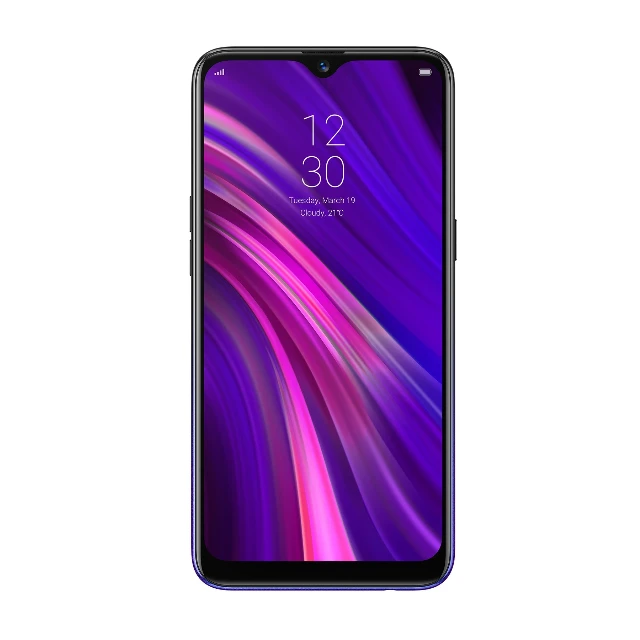
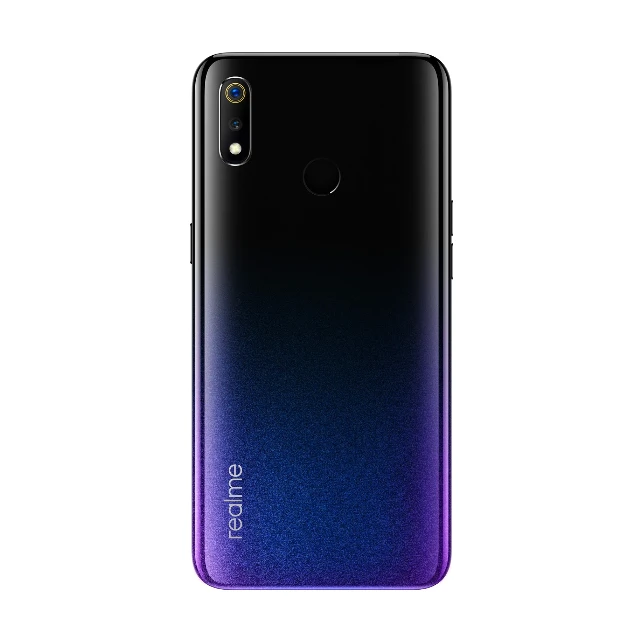
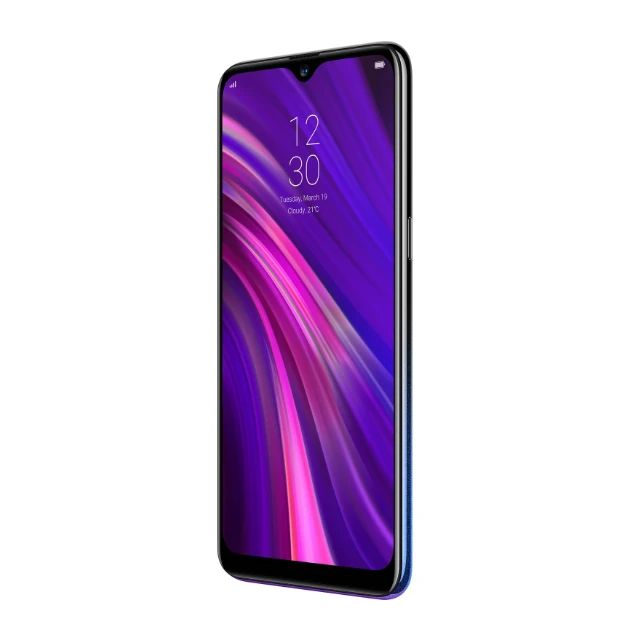
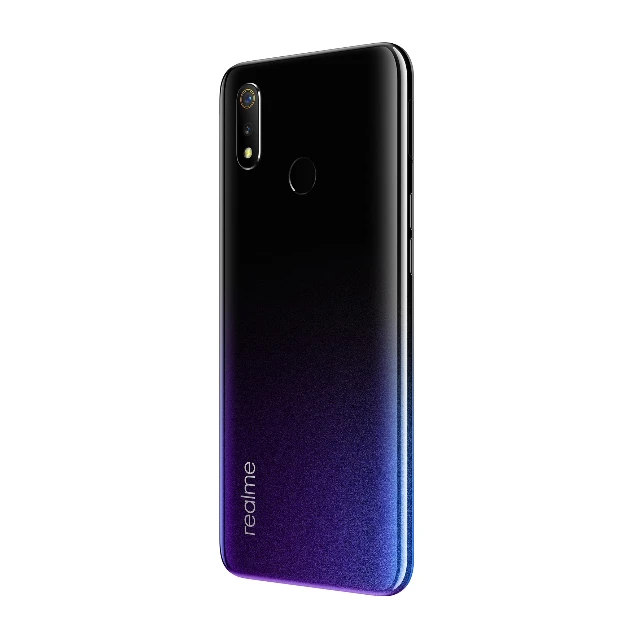
The Realme 3 is a budget smartphone launched in India in March 2019, designed to offer a combination of stylish design, dependable everyday performance and long battery life. It features a 3D gradient unibody design with a glossy finish, available in colours such as Dynamic Black, Radiant Blue and Classic Black. Its curved edges provide a comfortable grip, while the rear-mounted fingerprint sensor offers convenient unlocking.
The smartphone comes with a 6.2-inch HD+ Dewdrop display featuring a resolution of 1520 × 720 pixels and a 19:9 aspect ratio. The screen provides a reasonably large viewing area for browsing, watching videos and using everyday applications, although its HD+ resolution is less sharp than Full HD+ panels.
Powering the Realme 3 is the MediaTek Helio P70 octa-core processor, paired with up to 4GB RAM and 64GB internal storage. The chipset handles routine activities such as social media, web browsing, messaging and light gaming. Storage can also be expanded up to 256GB using a microSD card.
For photography, the device features a dual rear camera system comprising a 13MP primary sensor with an f/1.8 aperture and a 2MP depth sensor. Camera features include Nightscape and Chroma Boost, which help improve low-light photography and colour reproduction. The 13MP front camera with an f/2.0 aperture supports selfies and video calls.
The Realme 3 packs a 4,230mAh battery designed to support extended daily usage. It supports 10W wired charging through a Micro-USB port, rather than modern fast-charging technology. On the software front, it originally launched with ColorOS 6.0 based on Android 9 Pie, offering features such as gesture navigation and an app drawer.
Connectivity options include dual SIM support, 4G VoLTE, Wi-Fi, Bluetooth 4.2, GPS and a 3.5mm headphone jack. Overall, the Realme 3 offers a practical combination of essential smartphone features for users looking for an affordable device for everyday tasks.
The Realme 3 was a competitive budget smartphone at its launch, particularly for buyers looking for a capable processor, attractive design and a large battery without spending much. Its MediaTek Helio P70 chipset was one of its notable strengths, providing sufficient processing power for everyday applications, multitasking and casual gaming.
The 4,230mAh battery is another useful feature, offering enough capacity for a typical day of moderate usage. The gradient-finish design also gives the device a distinctive appearance compared with many entry-level smartphones from its launch period.
However, the phone has several limitations that become more noticeable with time. Its HD+ display does not provide the sharpness of Full HD+ alternatives, while the 2MP secondary camera mainly assists with depth information rather than offering additional photographic versatility. The primary camera is suitable for basic daylight photography, but low-light results and image consistency are limited.
Charging is another drawback. The 10W charging support and older Micro-USB connector feel dated, particularly when compared with newer smartphones. Its original Android 9-based software is also outdated by current standards, which limits its suitability for users who prioritise modern software features and ongoing security updates.
The Realme 3 is best suited to buyers interested in a basic secondary smartphone, users with light everyday requirements or people exploring an inexpensive refurbished device. However, in 2026, it is difficult to recommend as a primary smartphone because of its ageing hardware, software and connectivity standards.
Our verdict: The Realme 3 was a well-rounded budget smartphone for its time, but its limitations make it more suitable for basic usage than demanding applications or long-term smartphone ownership today.