
A smartphone processor is one of the most important components that determines how efficiently a mobile phone performs everyday tasks. Whether you are opening applications, playing games, capturing photos, browsing the internet or using AI-powered features, the processor plays a major role in handling these operations.
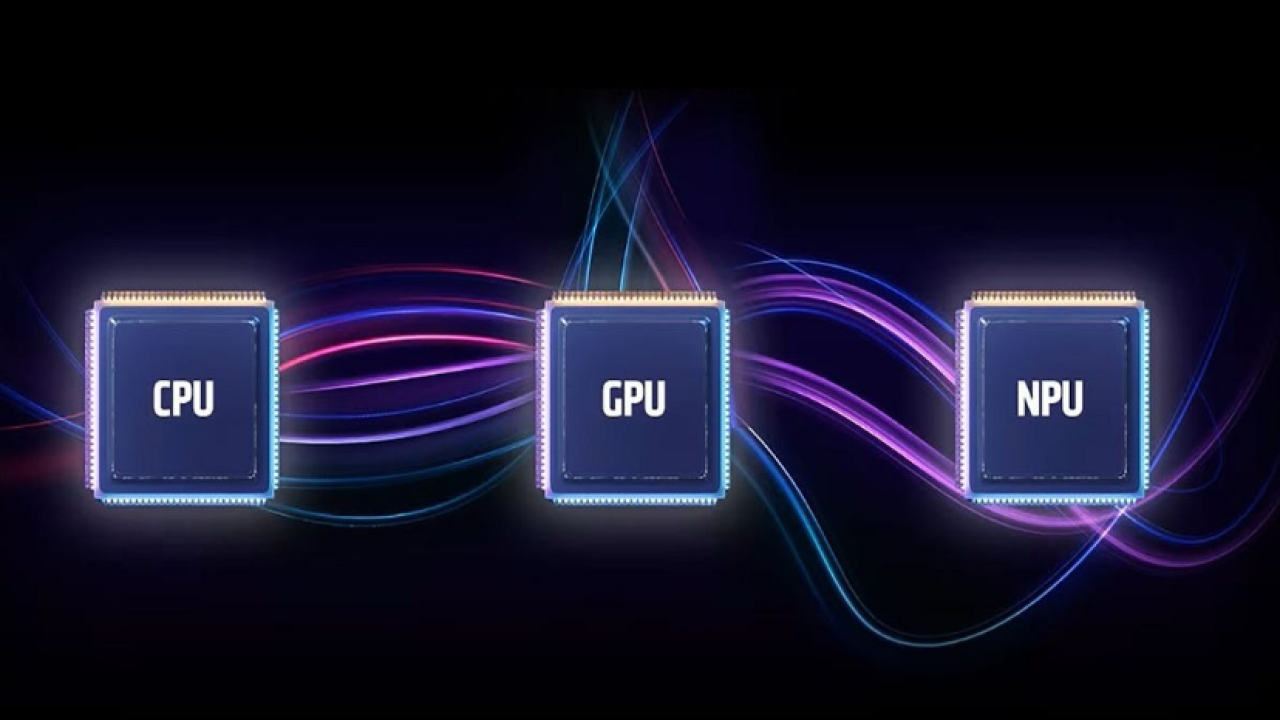
Modern smartphones use advanced processors that contain multiple specialised processing units, including the CPU (Central Processing Unit), GPU (Graphics Processing Unit) and NPU (Neural Processing Unit).
Each unit performs a different function, but they work together to deliver a smooth smartphone experience.
So, what exactly is a smartphone processor? What are CPU, GPU and NPU, and how do they affect mobile performance? Let’s understand each component in detail.
If you are planning to buy a new device, exploring the latest mobile phones can help you understand how different smartphone processors are used across various price segments.
What Is a Smartphone Processor?
A smartphone processor is a computing component responsible for executing instructions, processing information and managing different operations within a mobile device.
Most modern smartphones use a System-on-Chip (SoC), which combines several important components into a single chip.
These components can include:
CPU for general-purpose processing.
GPU for graphics and visual processing.
NPU for specialised artificial intelligence tasks.
ISP (Image Signal Processor) for processing camera data.
Modem for mobile network connectivity.
Memory controllers for managing communication with RAM and storage.
Popular smartphone processor platforms include Qualcomm Snapdragon, MediaTek Dimensity, Apple A-series and Samsung Exynos.
Although these platforms have different architectures and designs, they perform similar fundamental tasks to operate a smartphone.
What Is a CPU in a Smartphone?
CPU stands for Central Processing Unit. It is often described as the brain of a smartphone because it handles general-purpose instructions and coordinates many of the device’s operations.
Whenever you open an application, navigate through menus, browse websites or perform everyday tasks, the CPU helps process the instructions required to complete those activities.
Main functions of a smartphone CPU
Running the Android or iOS operating system.
Opening and managing applications.
Handling background processes.
Processing application instructions.
Managing system operations.
Coordinating tasks between different processing units.
CPU cores explained
Modern smartphone processors contain multiple CPU cores designed to handle different workloads.
For example, a processor may include:
Performance cores for demanding tasks.
Efficiency cores for lighter workloads.
Additional specialised core configurations depending on the processor architecture.
Performance cores are designed to handle demanding applications, while efficiency cores focus on completing lighter tasks using less power.
This combination helps smartphones balance processing speed and battery consumption.
A CPU with a well-designed architecture can deliver responsive performance while maintaining power efficiency.
What Is a GPU in a Smartphone?
GPU stands for Graphics Processing Unit. It is responsible for processing graphics and handling workloads that involve many calculations simultaneously.
While the CPU handles general-purpose instructions, the GPU specialises in parallel processing, making it particularly useful for graphics-intensive applications.
Main functions of a smartphone GPU
Rendering game graphics.
Displaying 2D and 3D visuals.
Processing graphical effects.
Supporting high-resolution displays.
Handling certain parallel computing workloads.
Accelerating some AI-related operations.
How does a GPU affect mobile gaming?
The GPU plays an important role in smartphone gaming because it processes the visual elements displayed on the screen.
For example, when playing a demanding 3D game, the GPU handles graphics rendering, lighting effects, textures and other visual calculations.
A more capable GPU can support better graphics quality and higher frame rates, provided the game, display and cooling system can take advantage of its performance.
Popular mobile GPU architectures include:
Adreno GPUs in many Qualcomm Snapdragon platforms.
Mali and Immortalis GPUs in various Arm-based platforms.
Apple-designed GPUs in A-series processors.
Therefore, when comparing smartphones for gaming, it is important to look beyond CPU performance and consider GPU capabilities as well. You can use a smartphone comparison platform to evaluate different devices and their hardware specifications.
What Is an NPU in a Smartphone?
NPU stands for Neural Processing Unit. It is a specialised processing unit designed to accelerate artificial intelligence and machine learning workloads.
Unlike a CPU, which handles a wide range of general-purpose tasks, an NPU is designed to process certain AI operations efficiently.
Modern smartphones increasingly use NPUs to support AI-powered features without relying entirely on cloud processing.
Main functions of a smartphone NPU
AI-powered image processing.
Real-time voice recognition.
Background removal and image enhancement.
Face and object recognition.
On-device language processing.
AI-powered photography features.
Certain generative AI operations.
Why is an NPU important in modern smartphones?
Smartphone manufacturers are introducing more AI-powered features into their devices.
For example, an NPU can help process supported AI workloads locally on the smartphone. This can reduce dependence on internet connectivity for certain features and help improve responsiveness and privacy.
However, not every AI feature runs exclusively on the NPU. Some workloads may use the CPU, GPU, dedicated accelerators or cloud-based processing depending on the device and software.
CPU vs GPU vs NPU: Key Differences
| Feature | CPU | GPU | NPU |
|---|---|---|---|
| Full form | Central Processing Unit | Graphics Processing Unit | Neural Processing Unit |
| Main purpose | General processing | Graphics and parallel processing | AI and machine learning |
| Main workload | Applications and system tasks | Gaming and graphics | AI-powered features |
| Processing style | General-purpose | Highly parallel | Specialised AI processing |
| Common use | Opening apps and multitasking | Rendering game graphics | Image recognition and AI tasks |
All three processing units work together to provide the smartphone’s overall computing capabilities.
CPU vs GPU vs NPU: Which Is More Important?
There is no single answer because each processing unit serves a different purpose.
For everyday usage: The CPU is particularly important because it handles operating system operations, applications and general processing tasks.
For mobile gaming: The GPU becomes especially important because it handles graphics rendering and visual effects.
For AI-powered features: The NPU can make a significant difference by accelerating supported machine learning and AI workloads.
A well-balanced smartphone processor should have capable CPU, GPU and AI processing components rather than focusing on just one unit.
What Is the Difference Between a Processor and a Chipset?
These terms are often used interchangeably in smartphone specifications, but they can refer to different things.
A processor generally refers to the computing component responsible for executing instructions.
A chipset or System-on-Chip combines several processing and communication components into a single integrated platform.
In modern smartphones, the main processor is usually part of a larger SoC that includes CPU cores, GPU, memory controllers, modem and other specialised components.
For example, Qualcomm Snapdragon and MediaTek Dimensity platforms integrate several components to support smartphone operations.
How Does a Smartphone Processor Affect Performance?
The processor influences several aspects of smartphone performance.
1. Application performance
A capable CPU helps applications launch, respond and execute tasks efficiently.
2. Gaming performance
The GPU handles graphics rendering, while the CPU manages game logic and other instructions. Both are important for a smooth gaming experience.
3. Camera performance
The processor’s image signal processor helps process camera data, while the CPU, GPU and specialised accelerators may contribute to computational photography.
4. Battery efficiency
An efficient processor can complete tasks while consuming less energy. However, actual battery life also depends on the display, network connectivity, battery capacity and software optimisation.
5. AI performance
An NPU and other specialised accelerators can improve the efficiency of supported on-device AI features.
How to Choose a Smartphone Based on Its Processor
Before purchasing a smartphone, consider how you plan to use it.
For everyday usage: Look for a balanced processor that offers reliable performance and power efficiency.
For gaming: Prioritise CPU and GPU capabilities, cooling and sustained performance.
For photography: Consider the image processing capabilities, camera sensors and software optimisation.
For AI features: Check whether the processor supports the specific on-device AI features you need.
For multitasking: Consider the processor alongside RAM capacity and memory technology.
RAM technology also influences how efficiently a processor accesses data. Understanding LPDDR4X vs LPDDR5 vs LPDDR5X can help you understand another important part of smartphone performance.
You should also compare the complete hardware configuration rather than relying only on processor names or benchmark scores. Techorz aims to make this easier by helping users discover and compare smartphones based on their requirements.
Conclusion
A smartphone processor is more than just a single processing unit. Modern smartphone platforms combine multiple specialised components to handle different types of workloads.
The CPU manages general-purpose tasks and system operations, the GPU handles graphics and parallel processing, while the NPU accelerates supported artificial intelligence workloads.
Understanding these components makes it easier to evaluate smartphone specifications and choose a device that suits your requirements.
Instead of comparing smartphones based only on processor names or RAM capacity, consider the complete hardware configuration, including CPU, GPU, NPU, memory, cooling and software optimisation.
Visit Techorz to explore smartphones, understand their specifications and compare different mobile phones before making your next purchase.
FAQs
What does a processor do in a smartphone?
A smartphone processor executes instructions, manages applications and handles different computing operations. It helps the device perform everyday tasks, gaming, photography and AI-related functions.
What is the difference between CPU, GPU and NPU in smartphones?
The CPU handles general-purpose processing, the GPU manages graphics and parallel computing, while the NPU accelerates specialised artificial intelligence and machine learning workloads.
Is CPU or GPU more important in a smartphone?
Both are important but serve different purposes. The CPU handles applications and system operations, whereas the GPU is particularly important for gaming and graphics performance.
What is an NPU in a mobile processor?
An NPU (Neural Processing Unit) is a specialised processing component designed to accelerate AI and machine learning tasks, including supported image recognition, voice processing and on-device AI features.
Does a higher GHz processor mean better smartphone performance?
Not necessarily. Clock speed is only one factor. Processor architecture, CPU core configuration, GPU performance, thermal management and power efficiency also influence overall performance.
What is the difference between a processor and a chipset?
A processor generally refers to the computing component that executes instructions. A chipset or System-on-Chip (SoC) integrates several components, including CPU, GPU, memory controllers and connectivity features, into one platform.
Which smartphone processor is best for gaming?
The best gaming processor depends on CPU and GPU capabilities, sustained performance, thermal management and software optimisation. A higher-performing GPU and effective cooling system are particularly important for demanding mobile games.
Does a smartphone processor affect battery life?
Yes. Processor efficiency influences how much power is consumed during different workloads. However, battery capacity, display technology, network connectivity and software optimisation also affect battery life.